STUDIODARTEROBERTA

FIGURATIVE
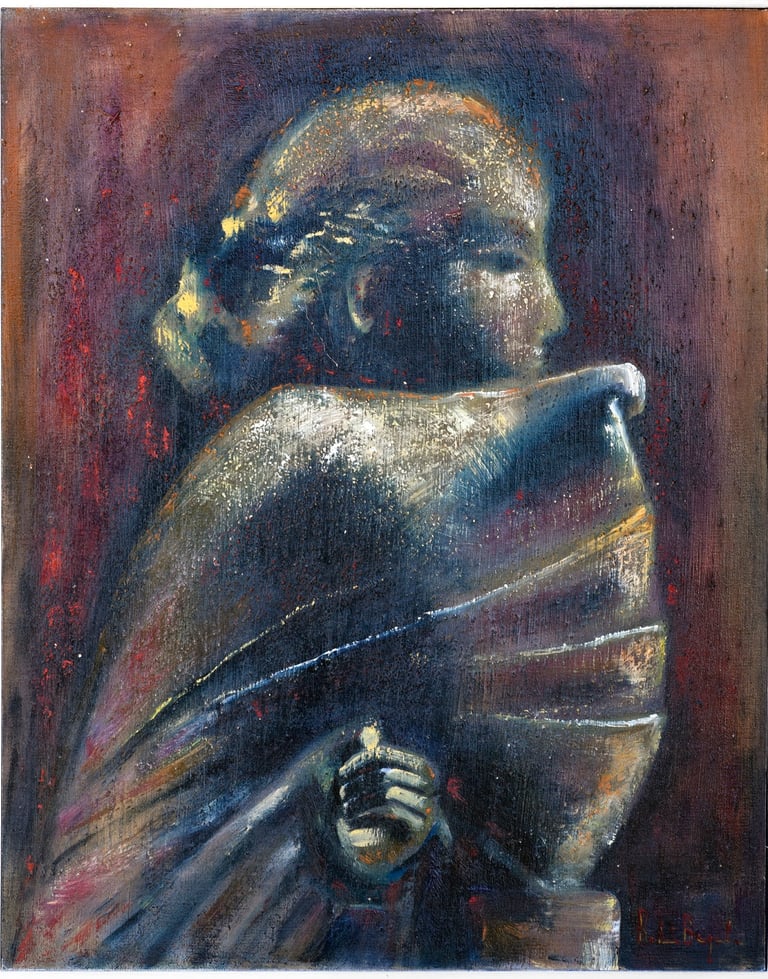
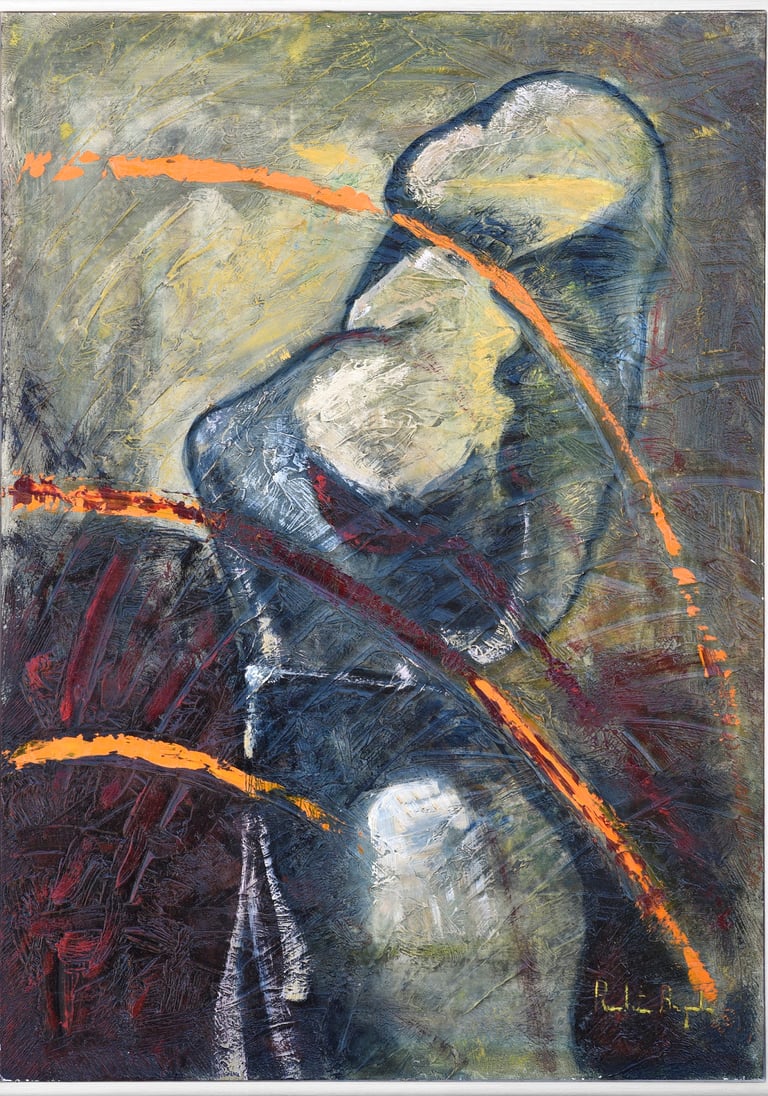
In this section I wanted to include a group of works that I am particularly attached to.
Every time I look at them, I relive significant moments of a happy period of my life, full of dreams and hopes, evoking in me feelings of nostalgia and gratitude.
I believe that art has the power to convey not only personal experiences but also a deep connection with who we are and the path we have taken.
POLYHYMNIAS
The idea arose from an encounter with a Roman statue of Polyhymnia, a copy of a Hellenistic original located in Rome. The painting depicts the muse in a reflective pose, her face resting on her hand, in a moment of meditation and introspection. Wrapped in a soft cloak that vanishes in the air, she seems, with a light breath, to abandon her thoughts to the wind. In Greek mythology, the Muse Polyhymnia is one of the nine Muses, daughters of Zeus and the Titaness Mnemosyne (Memory). She represents the muse of sacred song, dance, pantomime, and eloquence..
POLIMNIA
50x40
Canvas board prepared with glue and sand - oil colors
2013
THE DANCING MENADE
A figure writhes in space, abandoned to movement, but not free. A body in tension, traversed by invisible forces, by impulses it cannot tame. It does not dance: it resists. Its form shatters, its contours dissolve, its face disappears. A fractured identity, shaken, held in the final gesture of one seeking escape. It evokes the distant echo of an ancient maenad—the one who danced for Dionysus, but here the sacred becomes wounded, ecstasy yields to pain. It is the woman torn apart, reduced to a symbol, immersed in a whirlpool that drags her and consumes her. She does not scream, but her silence is deafening. "Dancing Maenad" refers to a follower of Dionysus, the Greek god of intoxication and sensual liberation, who participates in ecstatic and frenetic dances during the god's rites, a symbol of transcendence from reality and abandonment to irrationality and primal instinct.
THE DANCING MENADE
50x70
Canvas board prepared with glue and filler - oil colors
2013
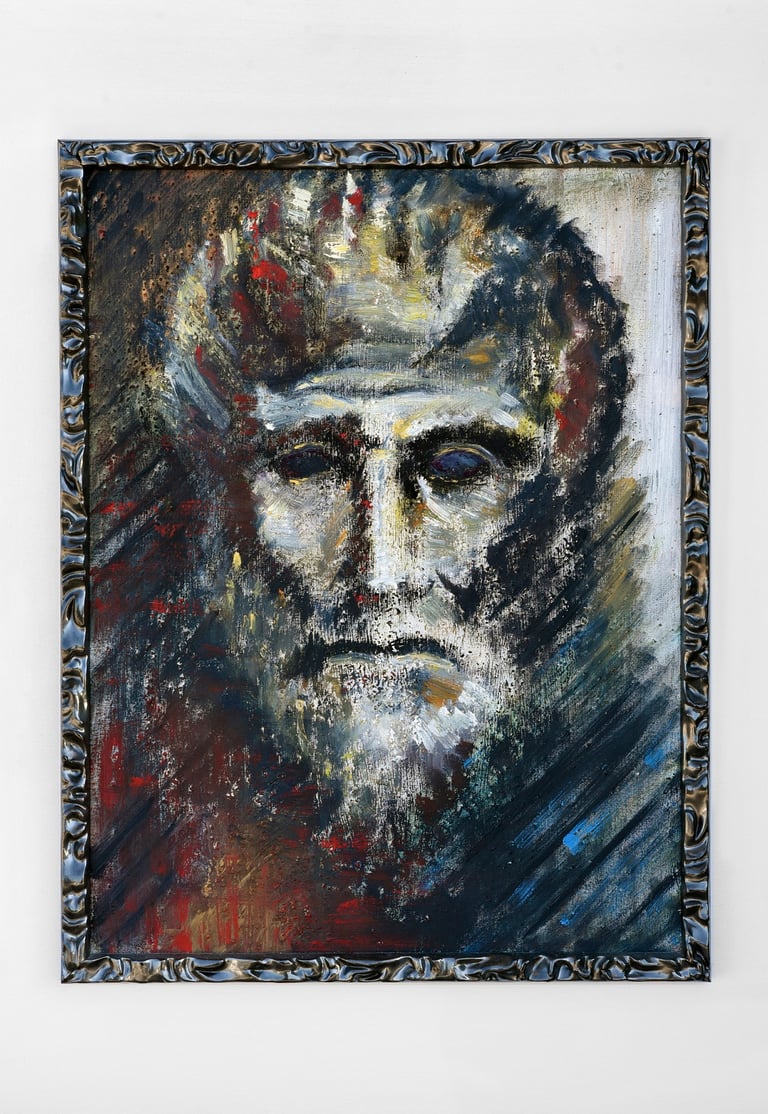
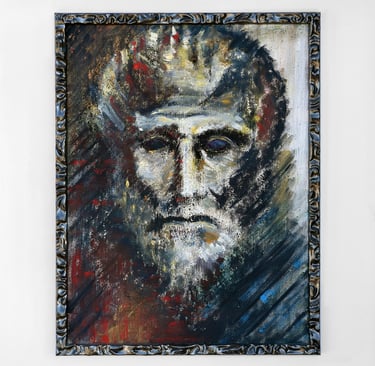
ARISTOTELE
Below is a famous passage from Aristotle's Metaphysics, where the philosopher states that all human beings naturally aspire to knowledge. He emphasizes that this desire is evident in our love for sensations, especially sight, because it allows us to know the world more than any other sense, even independently of a practical purpose. "All men by nature aspire to knowledge. A sign of this is their love of sensations: for they love sensations for their own sake, even independently of their usefulness, and, even more, they love the sensation of sight. Indeed, not only for the purpose of action, but even without any intention of action, we prefer sight, in a certain sense, to other sensations. And the reason is that sight allows us to know more than all the other sensations." From his work "Metaphysics"
ARISTOTELE
30x40
Canvas board prepared with glue and sand - oil colors
2013